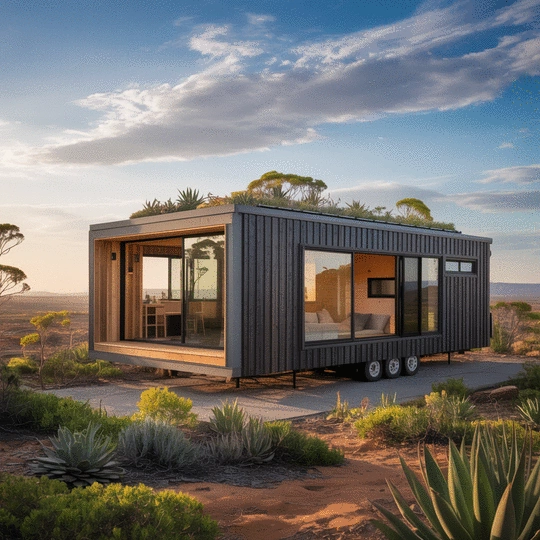
Upgrading Your Block: Replacing an Aging Property with a Modern Modular Home
Posted on: 2026-03-03
By: Sophie Marchant
Modular homes in Australia now account for roughly five percent of the entire construction sector, and Melbourne has emerged as one of the country's fastest-growing prefabricated housing markets.
That share is climbing, not because modular is a novelty, but because it solves real problems that aging housing stock creates every single day. Cold drafts, crumbling insulation, outdated floor plans, and skyrocketing energy bills are daily realities for owners of older Melbourne properties. Replacing an inefficient old house with a modern modular design is one of the most strategic property decisions a Melbourne landowner can make in 2025.
Why Aging Properties Fall Further Behind Each Year
An older home does not stand still. Every year it goes without significant renovation, it falls further behind modern construction standards in energy performance, safety, and livability. Most Melbourne homes built before the 1990s were constructed under building codes that set no meaningful minimum for thermal performance.
Single-pane timber-sash windows, uninsulated cavity walls, draughty subfloor voids, and gas-dependent heating systems were standard features designed for an era when energy was cheap, and climate comfort was a luxury rather than a baseline expectation.
The gap between these older homes and today's standards has widened sharply. Since October 2023, the National Construction Code (NCC 2022) has required all new residential buildings in most states to meet a minimum 7-star NatHERS thermal performance rating. Under the Nationwide House Energy Rating Scheme, stars are awarded out of ten; a higher rating means the home needs less artificial heating and cooling to stay comfortable year-round.
Moving from a 6-star to a 7-star home alone can reduce heating and cooling energy demand by more than 20 percent. An older Melbourne home with no insulation and single glazing might score 2 or 3 stars at best.
The financial consequence is measurable. Heating and cooling account for roughly 40 percent of household energy consumption in Australia. An older home continuously forces residents to compensate with artificial climate control for what modern building fabric would handle passively. Utility bills in well-designed modern homes run substantially lower than in comparable older dwellings, and that gap widens every time energy prices increase.
Beyond energy, the maintenance burden of an aging property compounds over time. Roof structures deteriorate, subfloor timbers succumb to moisture, asbestos-containing materials in homes built before 1990 demand careful management, and plumbing and electrical systems may no longer meet current safety standards. At a certain point, pouring money into recurring repairs on an aging structure delivers diminishing returns compared to replacing it entirely.
What Makes Modular Construction Different from Traditional Building
The term "modular home" refers to a dwelling built as a series of large sections, modules constructed in a controlled factory environment, then transported to the site and assembled on the prepared foundation. Between 70 and 90 percent of the construction takes place off-site before the modules ever arrive on the block.
This is fundamentally different from a conventional build, where tradespeople work sequentially on a single site subject to weather, supply delays, and coordination challenges.
Factory construction eliminates many of the inefficiencies that drive up cost and time on traditional builds. Materials are ordered in precise quantities, stored indoors, and worked on by specialist teams using consistent processes. Weather delays, a common cause of cost blowouts in Melbourne, where rain can halt site work for days at a time, do not affect factory production. Quality checks happen continuously in a controlled setting rather than on an exposed site, where issues can go unnoticed until they become expensive problems.
The speed advantage is significant. Most modular homes are ready to occupy within 14 to 20 weeks from the start of construction. A comparable traditional build in Melbourne commonly takes 12 to 18 months. That time difference has real financial weight: shorter construction periods mean less time paying rent elsewhere or carrying dual costs, and projects can be financed with greater certainty because the build timeline does not keep shifting.
Cost predictability is another material advantage. Modular projects price materials and labour at factory scale with far less exposure to the on-site variable costs that routinely push conventional builds over budget. Australian modular homes in 2025 typically range from $150,000 to $400,000, depending on size, design complexity, and inclusions, with two-bedroom projects starting from around $350,000 for premium Melbourne-area builds.
Compared to a traditional build, which averages around $1,390 per square metre for basic construction and up to $3,000 per square metre for premium finishes in Melbourne, modular delivers comparable quality with savings of 15 to 30 percent in overall cost.
The Energy Performance Gap: Old Home vs. Modern Modular
The performance difference between an older Melbourne home and a purpose-designed modular dwelling is not marginal. It is structural, and it affects comfort every single day.
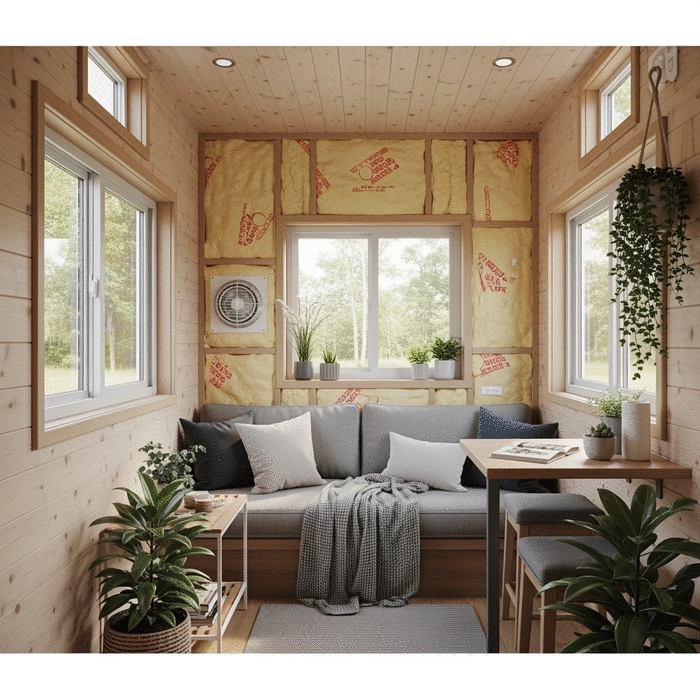
Modern modular homes designed to NCC 2022 standards incorporate airtight construction techniques, high-performance insulation in walls, floors, and ceilings, and double or triple-glazed window systems. Many use uPVC window frames, which offer superior thermal insulation compared to standard aluminium and prevent the condensation and heat loss associated with older single-pane timber windows.
Combined with passive solar design principles, orienting the home to capture winter sun from the north, using eaves and awnings to block summer heat, and positioning windows to drive natural cross-ventilation, a well-designed modular home can achieve 7-star NatHERS ratings or higher with minimal active heating and cooling required.
Several leading Melbourne-area modular builders set a minimum 7-star NatHERS rating as their standard across all designs. At that performance level, a one-star increase above the prior 6-star minimum is estimated to reduce heating and cooling costs by around 30 percent.
Some recent modular builds have demonstrated 30 percent reductions in heating and cooling expenditure within the first year of occupation. For a household spending $2,000 per year on heating and cooling an inefficient older home, the ongoing savings compound significantly over the life of the building.
The NatHERS star rating also unlocks financial benefits beyond lower energy bills. Lenders, including the Commonwealth Bank of Australia, now offer green home loan products with lower interest rates for homes meeting high energy efficiency benchmarks.
Victoria's Sustainable Homes Program provides grants of up to $8,000 for qualifying energy-efficient features in new builds. Homeowners installing solar panels through the Small-scale Renewable Energy Scheme are eligible for federal rebates that reduce the upfront cost of those systems substantially.
Starting the Transition: Clearing the Block
The practical path from an aging property to a modern modular home begins with site preparation, and for most older Melbourne dwellings, that means complete demolition of the existing structure. The easiest way to transition from a drafty, outdated house to an energy-efficient modular design is to schedule a complete house demolition in Melbourne to create a fresh canvas.
A cleared, level block allows the modular builder to work with full flexibility in positioning the new home, optimising orientation for passive solar gain, and designing the foundation to match the building's structural requirements precisely. Attempting to build around or attach to an existing structure introduces complications that add cost and compromise the design outcomes that make modular construction so effective.
Demolishing a standard Melbourne residential dwelling typically costs between $12,000 and $40,000, with an average of around $17,000. The price varies based on the size of the building, access conditions on the block, construction materials, and whether hazardous materials, particularly asbestos, are present.
Asbestos was widely used in Melbourne homes built before 1990 and requires removal by licensed professionals before demolition proceeds. A single-storey home typically runs $20,000 to $25,000, while a larger two-storey property with asbestos can reach $50,000 or more.
The demolition process in Melbourne involves multiple regulatory steps. Under Section 29A of the Building Act 1993, most full residential demolitions require a report and consent from the local council before a building permit for demolition can be issued. Council permits typically cost between $350 and $700, and unpermitted demolition work carries penalties of up to approximately $99,000.
Tree removal permits may also be required depending on the species and size of vegetation on the property, with rules varying between municipalities.
Engaging a licensed demolition contractor is not optional for most properties. Demolition permits are rarely issued to owner-demolishers because of the safety, insurance, and hazardous material management obligations involved.
A registered contractor handles council consent applications, asbestos notifications to WorkSafe Victoria, utility disconnections, asset protection bonds to protect surrounding roads and kerbs, and the Certificate of Final Inspection that confirms the site is clear and ready for the next phase of work.
Actual demolition of a standard Melbourne home typically takes three to five days once permits are in place. Site clearing, backfilling, and final inspection follow. Owners who plan can offset a portion of the demolition cost by salvaging reusable materials bricks, structural steel, and timber, with recoverable values ranging from $800 to over $12,000, depending on the building.
Navigating Council Approvals for the New Modular Home
Once the site is cleared, the modular build requires its own approval pathway. Modular homes are subject to the same planning and building permit requirements as conventional construction; they are assessed under Victorian building regulations and must comply with local zoning rules, setbacks, overlays, and the National Construction Code.
Council fees for approvals in Victoria typically range from $3,000 to $8,000, depending on the municipality and complexity of the application. Working with a modular builder that has established experience delivering approved projects in Melbourne significantly reduces the risk of approval delays. Many established builders in the Victorian market manage the council approval process on behalf of their clients and provide transparent timelines for the pre-construction phase.
Properties subject to Environmental Significance Overlays, Neighbourhood Character Overlays, or other special controls may face additional assessment requirements. Flood-prone areas and bushfire-rated land introduce further design and materials requirements that affect the base specification of the modular design. Engaging a builder or planning consultant familiar with Melbourne's permit environment at the earliest stage of planning prevents surprises that can delay projects by months.
Financing a modular build has become notably more accessible. Major lenders now provide construction loans for modular projects, with drawdown stages aligned to the factory build and delivery process rather than the traditional on-site construction milestones.
First home buyers may also be eligible for the First Home Owner Grant, ranging from $10,000 to $30,000 depending on the state and property value for a brand-new modular home, as well as the First Home Guarantee, which allows eligible buyers to build with as little as a 5 percent deposit without paying Lenders Mortgage Insurance.
Choosing the Right Modular Builder for a Melbourne Block
Not all modular builders operate with the same experience in Melbourne's specific conditions. Victoria's climate, with warm, dry summers and cool winters, has distinct requirements around thermal performance, and not all factory-built homes are designed with Melbourne's climate zone in mind.
Key questions to ask any modular builder include: what NatHERS rating does their standard design achieve, and can it be improved further? Have they completed projects in Melbourne's inner and middle suburbs, where block dimensions are typically narrower and access for module delivery requires careful logistical planning?
What is included in the base price, and what additional costs, such as site preparation, craning, utility connections, and council fees, are itemised separately? A reputable builder provides transparent cost schedules at the quoting stage rather than presenting a simplified headline figure that grows substantially during the project.
Design flexibility is also worth examining. Builders typically offer three pathways: standard designs from a fixed range, modifications to existing plans, or fully custom homes designed in collaboration with an in-house architect. For Melbourne blocks with unusual dimensions, slope, or orientation challenges, the ability to customise structural and window placement is not cosmetic; it directly affects the final energy rating and livability of the home.
Conclusion
Melbourne's aging housing stock is falling further behind modern standards each year in energy performance, safety, and practical livability. For property owners whose blocks carry houses that are expensive to maintain, uncomfortable to live in, and inefficient to heat and cool, the path forward is not endless renovation.
Replacing an outdated dwelling with a purpose-designed modular home delivers a measurable return: faster construction, predictable costs, superior thermal comfort, substantially lower running costs, and a building built from day one to the 7-star NatHERS benchmark that the National Construction Code now mandates for all new homes.
The transition starts with a clear site. From there, a well-chosen modular builder, early engagement with Melbourne's approval process, and a design that captures the full performance potential of factory construction can turn an underperforming block into a property that works harder financially and is far more pleasant to live in.
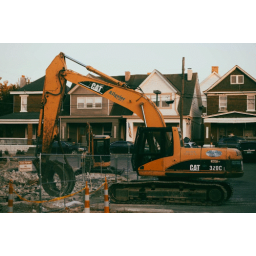 A modular home needs a block that is clean, level, accessible, and ready for services. If the projec
 Modular homes in Australia now account for roughly five percent of the entire construction sector, a
 Getting your gutter installation right is key to keeping your home safe from water damage. A good gu